Un sujet passionnant : «masturbate», présenté dans une vidéo YouTube
L’interprétation de SeniHealth sur « masturbate »
Cette vidéo a été ajoutée sur YouTube par SeniHealth il y a peu
concernant « masturbate »:
Au moment de notre découverte, cette vidéo avait un certain écho. Le compteur de Likes indiquait: 6673.
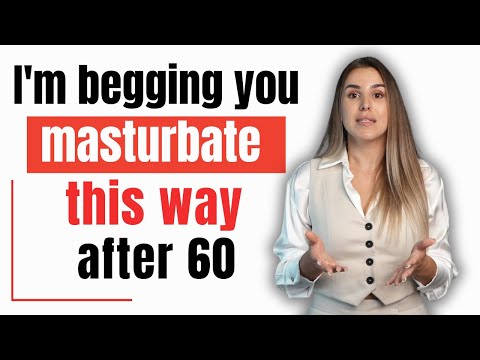
La vidéo dure 00:13:13 secondes et porte le titre Urologist Explains: How to Masturbate Safely After 60 & When to Seek Medical Help – Men’s Health, fournis par l’auteur. La description détaillée est la suivante :« L’urologue explique : Comment se masturber en toute sécurité après 60 ans et quand consulter un médecin – La santé des hommes Se masturber en toute sécurité après 60 ans n’est pas seulement une préoccupation physique : il s’agit de la façon dont votre corps, votre esprit et votre circulation vieillissants réagissent tous ensemble. Masturbez-vous en toute sécurité après 60 ans, c’est ce que cette vidéo explore en profondeur, offrant des conseils d’experts sur la protection de vos nerfs, de votre confiance et de votre bien-être à long terme. Dans cette étude approfondie de SeniHealth, la Dre Laura Stone, urologue, détaille les nouvelles règles d’un contact personnel sûr et curatif pour les hommes de plus de 60 ans. Si vous vous souciez de la santé des hommes, du plaisir et du fait de rester en phase avec votre corps en vieillissant, cette vidéo vous donne les réponses fondées sur la science que la plupart des hommes n’entendent jamais. Nous explorerons : • L’effet du vieillissement sur la sensibilité, la réponse érectile et la santé de la peau. • Les 5 principales erreurs de masturbation qui nuisent silencieusement aux hommes plus âgés. • Pourquoi la force de préhension, la vitesse et la lubrification sont plus importantes que jamais. • Comment savoir si votre technique aide ou fait doucement mal. la santé et l’utilisation du plaisir en solo dans le cadre d’une routine de soins personnels plus large. Nous expliquons son lien avec la circulation, l’équilibre hormonal et la clarté mentale. Vous découvrirez quoi changer, quoi arrêter et quoi écouter dans votre propre corps. Parce que la santé des hommes après 60 ans ne consiste pas à revenir en arrière, mais à s’adapter avec soin, respect et une meilleure conscience. Si vous souhaitez soutenir votre prostate, retrouver confiance en vous ou simplement vous sentir à nouveau plus à l’aise dans votre corps, ceci est votre guide de connaissances réelles et respectueuses, sans conjectures. #menshealth #prostatehealth #prostatehealthtips #sexualhealth #healthyaging #seniorhealthtips #urologistadvice #over60health #seniorhealth  TIMESTAMPS : 00:00 – Ce que la plupart des hommes ne réalisent pas à propos du toucher après 60 ans 00:38 – Pourquoi le Dr Laura Stone a créé ce guide 01:04 – Comprendre le corps masculin vieillissant : testostérone, flux sanguin et nerfs 02:32 – 5 erreurs silencieuses qui nuisent au plaisir des hommes plus âgés 05:25 – Une technique sûre, étape par étape, pour se masturber en toute sécurité après 60 ans 08:38 – Le rôle de l’état d’esprit, de l’humeur et de l’espace 10:28 – Quand consulter un médecin : 4 signes avant-coureurs 11:45 – Redéfinir le plaisir et la connexion après 60 ans 12:36 – Dernier conseil et lien avec la santé de votre prostate Si vous avez fini 60 ans et que vous souhaitez mieux comprendre votre corps, ne manquez pas notre prochaine vidéo :
  « Si vous êtes plus âgé et que vous vous masturbez, je vous invite à regarder cette vidéo… » → https://www.youtube.com/watch?v=ZaRI2JKhmPA Restez informé. Reste fort. SeniHealth – où de vraies solutions répondent aux vrais besoins des hommes après 60 ans.
  À propos de cette chaîne – SeniHealth Chez SeniHealth, nous aidons les hommes de plus de 60 ans à prendre le contrôle de leur santé. De la testostérone et de la circulation sanguine à l’alimentation, au sommeil et à l’identité masculine, chaque vidéo est basée sur les connaissances d’experts et conçue pour votre étape de la vie. Nous publions chaque jour une nouvelle vidéo — claire, pratique et axée sur ce qui compte vraiment après 60 ans.
  Abonnez-vous à SeniHealth ici → https://www.youtube.com/channel/UC2YBYzgOFeAX-olLiF-V-Dw ?sub_confirmation=1
  Laissez une question ou un commentaire si ce sujet vous intéresse — le Dr Mohit Khera lit toutes les suggestions pour façonner les futures vidéos. Et n’oubliez pas de partager avec quelqu’un qui en a besoin.
  Avertissement : Cette vidéo est à titre informatif uniquement et ne constitue pas un avis médical. Veuillez consulter votre médecin ou un professionnel de la santé qualifié avant d’apporter des modifications importantes à votre alimentation ou à vos habitudes de santé. ».
YouTube est un excellent espace pour découvrir des vidéos touchant une grande variété de sujets, allant de la culture à des réflexions personnelles, tout en assurant que chaque utilisateur puisse interagir dans un cadre respectueux et sûr.
Décrypter les dimensions de la dépendance à la masturbation et ses répercussions
Décrire la masturbation et les méthodes les plus répandues
Connue pour ses effets bénéfiques sur la santé, comme la gestion du stress et une meilleure conscience corporelle, la masturbation peut devenir problématique si elle est pratiquée de manière fréquente.
Distinguer les symptômes d’une dépendance
La masturbation excessive, symptôme de la dépendance, entraîne une fréquence accrue et une perte de maîtrise, ce qui peut créer des tensions dans les relations avec un partenaire.
Se pencher sur l’effet global sur la santé mentale et physique
La consommation instinctive de pornographie, couplée à une dépendance à la masturbation, stimule constamment le système dopaminergique, ce qui peut entraîner des conséquences comme l’éjaculation précoce, une diminution de l’énergie ou des frustrations sexuelles.
Repenser la masturbation : un défi pour une sexualité épanouie
Pour de nombreuses personnes, hommes et femmes confondus, mettre fin à la masturbation peut représenter un véritable défi. Si cette activité est souvent vue comme une pratique saine et normale pour mieux comprendre sa sexualité, elle peut toutefois devenir problématique lorsqu’elle prend une place excessive et empiète sur d’autres sphères de la vie, comme le travail ou la santé mentale.
Déterminer une approche pour interrompre cette pratique
Suggérer des actions pratiques pour diminuer cette pratique
- Repérer les éléments déclencheurs : Notez ce qui vous incite à avoir envie.
- Créer des objectifs bien définis : Suivez un plan progressif ou le mouvement « nofap » pour rester abstinent.
- Identifier ce qui déclenche l’envie : Prenez note des moments où vous ressentez le besoin.
Établir des mesures pour éviter les rechutes
- Bloquer l’accès à la pornographie : Activez des outils de filtrage pour limiter l’accès aux sites explicites.
- Restreindre l’accès à la pornographie : Mettez en place des bloqueurs pour empêcher l’accès aux contenus indésirables.
Mettre l’accent sur l’importance d’un réseau de soutien
- Prendre rendez-vous avec un sexologue : Il est capable de fournir des conseils sur mesure. (voir à ce proposce service)
- Intégrer un groupe de soutien : Échanger avec d’autres renforce la motivation.
Explorer les raisons de l’extension de cette pratique
Analyser les éléments psychologiques et émotionnels
Le stress, l’anxiété ou un sentiment d’insatisfaction dans d’autres domaines de la vie peuvent mener à cette pratique instinctive.
Réfléchir au rôle de l’isolement et du désir
L’isolement et le manque de satisfaction dans une relation ou dans la vie personnelle peuvent aussi être des déclencheurs de cette pratique.
Examiner comment la pornographie peut façonner les comportements
La pornographie est un élément majeur. Elle renforce souvent le besoin de se masturber et peut distordre la perception de la sexualité.
Évaluer les répercussions positives d’un arrêt réussi
Expliquer comment les interactions sociales deviennent plus harmonieuses
Les relations de couple gagnent en intensité, avec une meilleure connexion émotionnelle et physique.
Décrire le processus d’amélioration de la santé mentale
Lorsque l’on arrête, on peut observer une meilleure énergie, une humeur plus stable et une concentration renforcée.
Illustrer la route qui mène à une satisfaction durable
Moins de dépendance mène à des gains durables dans la vie personnelle, professionnelle et sociale.
En synthèse
Mettre un terme à la masturbation instinctive est un processus qui demande du temps et de la constance. Grâce à une approche structurée et au soutien nécessaire, il devient possible de réussir ce défi et d’accéder aux bienfaits d’une vie plus centrée et enrichissante.
Pour visionner la vidéo, cliquez ici pour accéder à YouTube :
le post original: Cliquer ici
#urologue #explique #Comment #masturber #toute #sécurité #après #ans #quand #consulter #médecin #Mens #Health
Retranscription des paroles de la vidéo: What if the technique you’ve used for 40 years is now silently working against your health? Most older men never get taught how to adapt. They just continue doing what always felt familiar, faster, firmer, focused only on the end goal. But after 60, your body changes. And if you don’t change with it, what once felt good can now lead to discomfort, frustration, and even long-term harm. Because the truth is, the wrong technique can quietly damage your circulation, reduce nerve sensitivity, and affect your confidence more than you realize. Today, we’re going to fix that. I’m Dr. Laura Stone, a board-certified urologist who spent the last 22 years supporting men over 60 in maintaining healthy, confident, and safe sexual lives with clarity and compassion. And in this video, I’ll walk you through how to adapt your self-touch routine in a way that protects your body, respects its changes, and supports your pleasure and health for years to come. First, let’s start with what’s changed. Because many men feel surprised, confused, or even ashamed when their bodies no longer respond the way they used to. But let me reassure you, this isn’t dysfunction. This is biology. As we age, several systems that affect sexual response begin to shift. Testosterone, the hormone responsible for libido, mood, and performance begins to decline. That doesn’t mean desire disappears completely, but it often becomes less spontaneous. Blood flow also changes. The small vessels that supply the penis can become less elastic and less efficient, making erections slower to build and more difficult to maintain, especially when you’re alone and relaxed. And then there’s the nervous system. Nerve endings that once reacted instantly can become a bit quieter. Touch may feel more muted. Sensations may take longer to process. So what does this mean for you? It means that the methods you relied on in your 20s, 30s, and even 50s, the habits built over decades may no longer serve your body. And that’s not your fault. It just means it’s time to update your technique. Unfortunately, many older men never realize this. They assume something is wrong with them or worse, they push harder. They tighten their grip, increase the speed, and focus entirely on climax, thinking that will somehow bring the feeling back. But these habits, fast, firm, outcomed driven, are actually working against your body after 60. So, let’s talk about the five silent mistakes I see most often in older men’s routines and how to avoid them. Mistake number one, using the same grip strength you’ve always used. After 60, the skin of the penis becomes thinner and more sensitive to friction. What used to feel pleasurable might now feel slightly irritating or even painful. A strong grip can damage small blood vessels, desensitize nerve endings, and reduce your body’s ability to respond. The fix: loosen your grip. Experiment with a gentler hold. Your goal isn’t force, it’s sensation. Mistake number two, going too fast too soon. When your nervous system slows down, fast motion can actually overwhelm it. The brain doesn’t register the signal fast enough, so pleasure can feel flat or confusing. Think of your body like a radio tuned to a slightly different frequency. The music is still there, but the tuning needs to be more precise. Slower, steady, rhythmic movements allow your brain to process the sensations more fully. Mistake number three, skipping lubrication. Many men think lubricant is only for partnered sex or only for women. That’s not true. As testosterone drops, natural lubrication decreases even in men. Combine that with thinner skin and dry stimulation becomes risky. It increases friction, which can cause micro tears, rashes, or delayed soreness. The solution is simple. Apply a gentle unscented water-based lubricant early before you feel fully aroused. This allows your skin to soften and respond and helps your nervous system interpret the touch as pleasurable instead of stressful. Mistake number four, forcing yourself to climax. Climax is not the measure of a successful experience, especially after 60. Your body may take longer. Your arousal may come in waves. And that’s not a failure. It’s a new rhythm. The harder you try to achieve pleasure, the more likely you are to activate stress hormones that actually suppress it. Let your experience unfold. If you feel satisfied before climax, that’s valid. If you pause and return later, that’s fine. Let go of the stopwatch. Mistake number five, ignoring your body’s signals. After decades of routine, it’s easy to go on autopilot. But self-touch after 60 is less about repetition and more about response. If something feels dull, adjust. If something feels uncomfortable, stop. If something feels unexpectedly good, stay with it. You’re not performing, you’re connecting. So, what does an adapted healthier self-touch technique actually look like? After 60, let me walk you through it step by step. First, choose your moment carefully. Don’t rush. Block out at least 15 to 20 minutes where you won’t be interrupted. You want your nervous system to feel safe, not on alert. Second, set the environment. Dim lighting, soft background music, or even warm lighting can signal your brain to relax. Comfort is the foundation of pleasure. Third, start with your breath. Before touching anything, take five slow, deep breaths. In through the nose, out through the mouth. This tells your body, « I’m safe. I’m present. I’m not in a rush. » Fourth, apply lubricant early, not as an afterthought, but as the first invitation. Gently rub it across your entire genital area. Let the warmth, moisture, and touch become part of the process, not just a setup. Fifth, explore slowly. Don’t go straight to the most sensitive areas. Think of this as a massage, not a machine. Explore pressure, temperature, even different hand angles or rhythms. Sixth pause when needed. If arousal fades, that’s okay. It may return or not. The goal isn’t to reach a finish line. The goal is to experience connection. And seventh, breathe throughout. Breath is your best tool for keeping blood flowing, staying relaxed, and tuning into sensation. This might feel unfamiliar at first, but for many men, this kind of approach opens the door to deeper satisfaction than they’ve felt in years. Now, let’s talk about how your position affects your experience, something many older men overlook. If you’re seated on a hard chair or hunched forward, you may be compressing pelvic nerves or blocking blood flow. Try reclining with support behind your back, lying on your side, elevating your legs slightly with a pillow. You may be surprised how much better things feel just by shifting your posture. Some men even benefit from soft aids like warming sleeves or textured tools designed to provide sensation without force. These aren’t toys. These are tools just like glasses or hearing aids designed to support your changing body. The point here is simple. Your body deserves adaptation, not judgment. Your technique deserves evolution, not repetition. You’re not broken. You’re just in a new phase. And that phase deserves guidance. Let’s shift now to something that often gets ignored, but is just as important as technique. Your mindset, your mental space, and the emotional side of self-care. You see, after 60, self-touch is no longer just about stimulation. It’s about creating a space where your mind, your body, and your nervous system can reconnect without pressure, without guilt, and without shame. Too many men still carry silent expectations that it has to look a certain way, that it has to end a certain way. That if it doesn’t feel like it used to, something must be wrong. But the truth is, what you’re experiencing isn’t failure. It’s a different kind of pleasure. Slower, softer, and more responsive to presence than performance. Take your time. Let the experience unfold like a slow wave, not a spark. If you feel tension building, pause. If you feel distracted, breathe. If you feel satisfied before climax, allow that to be enough. This is not a race. It’s not a test. It’s not a performance. This is you tuning back into your body’s language. And with time, you’ll find that what your body is saying now is different than what it used to say, but no less worthy of listening to. Now, let’s talk about when you should consider speaking to a doctor. Because while many of the changes you’re experiencing are natural, some can be signs that your body needs support. And knowing the difference is how you take care of yourself, not how you judge yourself. Here are four clear signs that it may be time to check in with a urologist. One, persistent pain or discomfort during or after self-touch. A mild sting dryness or burning feeling that doesn’t improve with lubricant or gentler technique could signal inflammation. Minor infection or tissue irritation. These are common and treatable, but left unressed, they can worsen over time. Two, sudden or ongoing numbness. A gradual decrease in sensation is common with age, but a sharp drop or dead zone of feeling may reflect a nerve-related issue that needs to be evaluated early. The earlier it’s caught, the better the outcome. Three, inability to get or maintain an erection even in calm, private settings. If arousal used to be possible and now feels impossible despite privacy, comfort, and rest, this may signal a blood flow or hormonal issue. This is not a reflection of your masculinity. It’s a vascular system, and it may need attention. Four, emotional distress linked to self-care. If you’re feeling anxious, ashamed, frustrated, or disconnected during or after self-touch, don’t ignore it. Emotional health and sexual function are deeply connected. Talking to a doctor isn’t a sign of weakness. It’s a sign of commitment to your own well-being. And you don’t need to wait for something to go wrong. Even a 30inut check-in with a urologist can give you clarity relief and practical next steps. If you’re unsure how to start the conversation, try something simple like, « I’ve noticed some changes in how my body responds during solo activity. Is this part of normal aging or something I should keep an eye on? You can also mention specific symptoms like dryness, sensitivity, loss, or blood flow concerns. Most experienced providers will know exactly what you mean and respond with the respect you deserve. So, let’s bring this all together. After 60, masturbation, or what I prefer to call intentional self-touch, is not about going back to what once was. It’s about moving forward with awareness. It’s about discovering what still works, what still feels good, and what still connects you to yourself. It’s about loosening your grip both physically and mentally. Slowing your pace, listening to your body instead of pushing it. Letting go of outdated definitions of success. Because pleasure after 60 is not just possible. It can be more grounded, more mindful, and more meaningful than ever before. Your body is not broken. It’s evolving. and you deserve to evolve with it, not against it. If this video helped clarify how to care for yourself more safely and respectfully, then what I’m about to say next is even more important. Even with the right technique, there’s one habit that silently affects your prostate health, especially if you masturbate regularly. Most men don’t realize it until it’s too late. So, before you close this tab, I urge you to keep watching. In the next video, I explain what every older man needs to know about how self-touch affects the prostate and what to do instead. Click here to watch if you’re older and masturbate. I urge you to watch this video because taking care of yourself means staying informed and staying ahead. You deserve real answers and that’s exactly what we give here at Senny .
Déroulement de la vidéo:
0.08 What if the technique you’ve used for 40
2.24 years is now silently working against
4.64 your health? Most older men never get
8.16 taught how to adapt. They just continue
11.04 doing what always felt familiar, faster,
13.84 firmer, focused only on the end goal.
16.64 But after 60, your body changes. And if
19.68 you don’t change with it, what once felt
22.0 good can now lead to discomfort,
24.4 frustration, and even long-term harm.
27.279 Because the truth is, the wrong
28.72 technique can quietly damage your
30.64 circulation, reduce nerve sensitivity,
33.44 and affect your confidence more than you
35.52 realize. Today, we’re going to fix that.
38.559 I’m Dr. Laura Stone, a board-certified
40.96 urologist who spent the last 22 years
43.84 supporting men over 60 in maintaining
46.16 healthy, confident, and safe sexual
48.239 lives with clarity and compassion. And
50.96 in this video, I’ll walk you through how
53.039 to adapt your self-touch routine in a
55.6 way that protects your body, respects
57.6 its changes, and supports your pleasure
60.0 and health for years to come. First,
62.719 let’s start with what’s changed. Because
65.04 many men feel surprised, confused, or
67.28 even ashamed when their bodies no longer
69.119 respond the way they used to. But let me
71.52 reassure you, this isn’t dysfunction.
73.92 This is biology. As we age, several
77.2 systems that affect sexual response
79.28 begin to shift. Testosterone, the
82.32 hormone responsible for libido, mood,
84.24 and performance begins to decline. That
86.72 doesn’t mean desire disappears
88.4 completely, but it often becomes less
90.479 spontaneous. Blood flow also changes.
93.36 The small vessels that supply the penis
95.52 can become less elastic and less
97.36 efficient, making erections slower to
100.0 build and more difficult to maintain,
102.56 especially when you’re alone and
104.079 relaxed.
105.52 And then there’s the nervous system.
107.84 Nerve endings that once reacted
109.68 instantly can become a bit quieter.
112.24 Touch may feel more muted. Sensations
115.28 may take longer to process. So what does
118.24 this mean for you? It means that the
120.719 methods you relied on in your 20s, 30s,
123.28 and even 50s, the habits built over
125.36 decades may no longer serve your body.
127.84 And that’s not your fault. It just means
130.239 it’s time to update your technique.
132.72 Unfortunately, many older men never
134.64 realize this. They assume something is
137.2 wrong with them or worse, they push
139.36 harder. They tighten their grip,
141.599 increase the speed, and focus entirely
143.44 on climax, thinking that will somehow
145.44 bring the feeling back. But these
147.68 habits, fast, firm, outcomed driven, are
150.0 actually working against your body after
152.16 60. So, let’s talk about the five silent
155.36 mistakes I see most often in older men’s
157.92 routines and how to avoid them. Mistake
161.36 number one, using the same grip strength
164.4 you’ve always used. After 60, the skin
167.92 of the penis becomes thinner and more
170.0 sensitive to friction. What used to feel
172.8 pleasurable might now feel slightly
174.64 irritating or even painful. A strong
177.519 grip can damage small blood vessels,
180.16 desensitize nerve endings, and reduce
182.48 your body’s ability to respond.
185.28 The fix: loosen your grip. Experiment
189.12 with a gentler hold. Your goal isn’t
192.08 force, it’s sensation.
194.72 Mistake number two, going too fast too
198.56 soon. When your nervous system slows
201.28 down, fast motion can actually overwhelm
203.84 it. The brain doesn’t register the
206.0 signal fast enough, so pleasure can feel
208.08 flat or confusing. Think of your body
210.72 like a radio tuned to a slightly
212.879 different frequency. The music is still
215.36 there, but the tuning needs to be more
217.599 precise. Slower, steady, rhythmic
220.48 movements allow your brain to process
222.879 the sensations more fully. Mistake
225.92 number three, skipping lubrication. Many
228.72 men think lubricant is only for
230.319 partnered sex or only for women. That’s
233.04 not true. As testosterone drops, natural
236.48 lubrication decreases even in men.
240.319 Combine that with thinner skin and dry
242.48 stimulation becomes risky. It increases
245.599 friction, which can cause micro tears,
247.92 rashes, or delayed soreness. The
250.56 solution is simple. Apply a gentle
252.879 unscented water-based lubricant early
255.28 before you feel fully aroused. This
258.0 allows your skin to soften and respond
260.56 and helps your nervous system interpret
262.32 the touch as pleasurable instead of
264.32 stressful.
265.84 Mistake number four, forcing yourself to
268.72 climax.
270.32 Climax is not the measure of a
272.16 successful experience, especially after
274.72 60. Your body may take longer. Your
277.6 arousal may come in waves. And that’s
280.0 not a failure. It’s a new rhythm. The
282.639 harder you try to achieve pleasure, the
285.04 more likely you are to activate stress
287.04 hormones that actually suppress it. Let
290.479 your experience unfold.
292.96 If you feel satisfied before climax,
295.28 that’s valid. If you pause and return
297.44 later, that’s fine. Let go of the
299.36 stopwatch.
301.28 Mistake number five, ignoring your
303.919 body’s signals.
305.84 After decades of routine, it’s easy to
308.08 go on autopilot. But self-touch after 60
311.199 is less about repetition and more about
313.28 response. If something feels dull,
315.68 adjust. If something feels
317.6 uncomfortable, stop. If something feels
320.24 unexpectedly good, stay with it. You’re
322.96 not performing, you’re connecting. So,
325.6 what does an adapted healthier
327.44 self-touch technique actually look like?
330.479 After 60, let me walk you through it
333.28 step by step.
335.44 First, choose your moment carefully.
338.08 Don’t rush. Block out at least 15 to 20
341.039 minutes where you won’t be interrupted.
342.96 You want your nervous system to feel
344.639 safe, not on alert.
347.36 Second, set the environment. Dim
350.32 lighting, soft background music, or even
352.479 warm lighting can signal your brain to
354.56 relax. Comfort is the foundation of
357.6 pleasure.
359.36 Third, start with your breath. Before
362.4 touching anything, take five slow, deep
365.12 breaths. In through the nose, out
367.52 through the mouth. This tells your body,
370.0 « I’m safe. I’m present. I’m not in a
372.639 rush. » Fourth, apply lubricant early,
376.4 not as an afterthought, but as the first
378.4 invitation. Gently rub it across your
381.12 entire genital area. Let the warmth,
384.24 moisture, and touch become part of the
386.319 process, not just a setup.
389.68 Fifth, explore slowly.
392.96 Don’t go straight to the most sensitive
394.8 areas. Think of this as a massage, not a
397.84 machine. Explore pressure, temperature,
400.319 even different hand angles or rhythms.
402.56 Sixth pause when needed. If arousal
405.44 fades, that’s okay. It may return or
408.24 not. The goal isn’t to reach a finish
410.88 line. The goal is to experience
412.72 connection. And seventh, breathe
415.52 throughout. Breath is your best tool for
418.4 keeping blood flowing, staying relaxed,
420.96 and tuning into sensation.
423.36 This might feel unfamiliar at first, but
426.56 for many men, this kind of approach
428.639 opens the door to deeper satisfaction
431.28 than they’ve felt in years. Now, let’s
434.16 talk about how your position affects
436.08 your experience, something many older
438.639 men overlook. If you’re seated on a hard
441.52 chair or hunched forward, you may be
443.84 compressing pelvic nerves or blocking
445.84 blood flow. Try reclining with support
448.639 behind your back, lying on your side,
452.0 elevating your legs slightly with a
453.68 pillow. You may be surprised how much
456.0 better things feel just by shifting your
458.0 posture. Some men even benefit from soft
460.639 aids like warming sleeves or textured
463.039 tools designed to provide sensation
465.28 without force. These aren’t toys. These
468.16 are tools just like glasses or hearing
470.08 aids designed to support your changing
472.16 body. The point here is simple. Your
475.039 body deserves adaptation, not judgment.
478.4 Your technique deserves evolution, not
480.639 repetition. You’re not broken. You’re
483.52 just in a new phase. And that phase
485.84 deserves guidance. Let’s shift now to
488.879 something that often gets ignored, but
490.56 is just as important as technique. Your
493.28 mindset, your mental space, and the
496.319 emotional side of self-care. You see,
498.96 after 60, self-touch is no longer just
501.68 about stimulation. It’s about creating a
504.72 space where your mind, your body, and
506.56 your nervous system can reconnect
508.319 without pressure, without guilt, and
510.639 without shame. Too many men still carry
513.519 silent expectations that it has to look
516.24 a certain way, that it has to end a
519.039 certain way. That if it doesn’t feel
521.2 like it used to, something must be
522.8 wrong. But the truth is, what you’re
525.279 experiencing isn’t failure. It’s a
527.839 different kind of pleasure. Slower,
529.36 softer, and more responsive to presence
531.279 than performance. Take your time. Let
534.56 the experience unfold like a slow wave,
537.6 not a spark. If you feel tension
540.32 building, pause. If you feel distracted,
543.2 breathe. If you feel satisfied before
545.92 climax, allow that to be enough. This is
549.12 not a race. It’s not a test. It’s not a
552.32 performance. This is you tuning back
554.56 into your body’s language. And with
557.279 time, you’ll find that what your body is
559.2 saying now is different than what it
561.92 used to say, but no less worthy of
564.24 listening to. Now, let’s talk about when
567.279 you should consider speaking to a
569.12 doctor. Because while many of the
571.2 changes you’re experiencing are natural,
573.44 some can be signs that your body needs
575.44 support. And knowing the difference is
577.76 how you take care of yourself, not how
580.08 you judge yourself. Here are four clear
583.839 signs that it may be time to check in
585.92 with a urologist.
588.08 One, persistent pain or discomfort
591.04 during or after self-touch. A mild sting
594.56 dryness or burning feeling that doesn’t
596.64 improve with lubricant or gentler
598.48 technique could signal inflammation.
601.12 Minor infection or tissue irritation.
604.16 These are common and treatable, but left
606.72 unressed, they can worsen over time.
609.76 Two, sudden or ongoing numbness. A
613.519 gradual decrease in sensation is common
615.839 with age, but a sharp drop or dead zone
618.64 of feeling may reflect a nerve-related
620.64 issue that needs to be evaluated early.
623.6 The earlier it’s caught, the better the
625.519 outcome. Three, inability to get or
629.12 maintain an erection even in calm,
631.279 private settings. If arousal used to be
634.48 possible and now feels impossible
637.04 despite privacy, comfort, and rest, this
639.92 may signal a blood flow or hormonal
642.24 issue. This is not a reflection of your
644.88 masculinity. It’s a vascular system, and
647.6 it may need attention. Four, emotional
651.04 distress linked to self-care.
654.48 If you’re feeling anxious, ashamed,
656.24 frustrated, or disconnected during or
658.16 after self-touch, don’t ignore it.
661.68 Emotional health and sexual function are
663.68 deeply connected. Talking to a doctor
666.32 isn’t a sign of weakness. It’s a sign of
668.56 commitment to your own well-being. And
670.72 you don’t need to wait for something to
672.24 go wrong. Even a 30inut check-in with a
675.04 urologist can give you clarity relief
677.2 and practical next steps. If you’re
680.16 unsure how to start the conversation,
682.0 try something simple like, « I’ve noticed
684.16 some changes in how my body responds
686.16 during solo activity. Is this part of
688.64 normal aging or something I should keep
690.32 an eye on? You can also mention specific
693.04 symptoms like dryness, sensitivity,
695.279 loss, or blood flow concerns. Most
697.76 experienced providers will know exactly
699.76 what you mean and respond with the
701.44 respect you deserve. So, let’s bring
704.0 this all together.
706.16 After 60, masturbation, or what I prefer
708.32 to call intentional self-touch, is not
710.72 about going back to what once was. It’s
713.36 about moving forward with awareness.
715.36 It’s about discovering what still works,
717.44 what still feels good, and what still
719.2 connects you to yourself. It’s about
721.6 loosening your grip both physically and
723.839 mentally. Slowing your pace, listening
727.519 to your body instead of pushing it.
729.839 Letting go of outdated definitions of
732.079 success. Because pleasure after 60 is
735.12 not just possible. It can be more
737.12 grounded, more mindful, and more
738.959 meaningful than ever before. Your body
741.519 is not broken. It’s evolving. and you
744.639 deserve to evolve with it, not against
746.639 it. If this video helped clarify how to
750.079 care for yourself more safely and
751.76 respectfully, then what I’m about to say
753.92 next is even more important. Even with
757.04 the right technique, there’s one habit
759.12 that silently affects your prostate
760.959 health, especially if you masturbate
762.72 regularly. Most men don’t realize it
765.279 until it’s too late. So, before you
767.519 close this tab, I urge you to keep
769.279 watching. In the next video, I explain
772.24 what every older man needs to know about
774.32 how self-touch affects the prostate and
776.8 what to do instead. Click here to watch
779.04 if you’re older and masturbate. I urge
781.6 you to watch this video because taking
784.0 care of yourself means staying informed
785.92 and staying ahead. You deserve real
788.399 answers and that’s exactly what we give
790.72 here at Senny
.
Vous pouvez lire ce post traitant le sujet « chasteté ». Il est produit par la rédaction de chastete.fr. Le site chastete.fr a pour objectif de publier plusieurs articles autour du sujet chasteté développées sur le web. Cette chronique se veut générée de la façon la plus juste qui soit. Pour émettre des remarques sur ce dossier autour du sujet « chasteté » prenez les contacts indiqués sur notre site internet. En consultant régulièrement nos contenus de blog vous serez au courant des futures parutions.